


Artist Bio
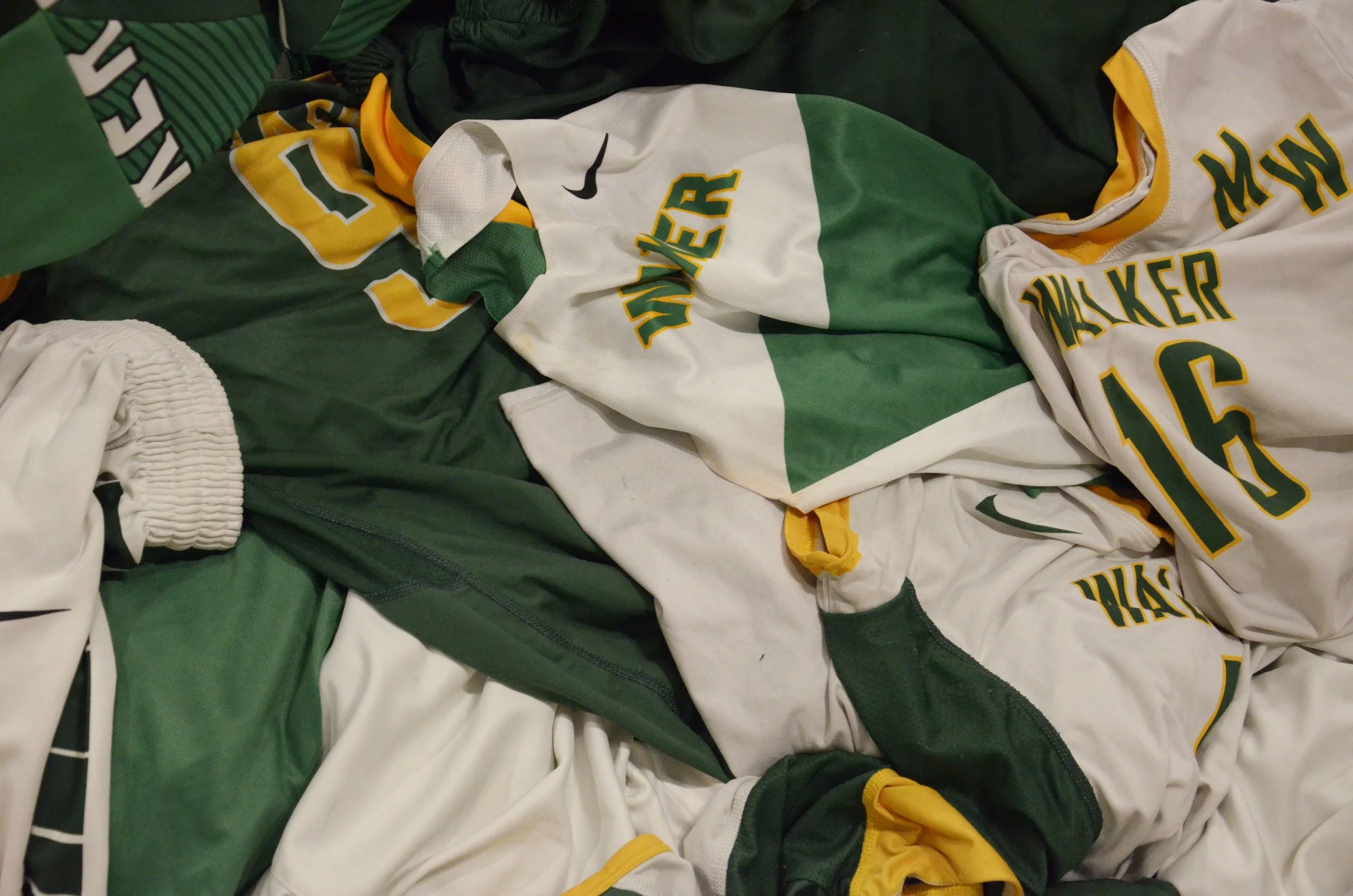
Serial Killer
by Jeannine Diego
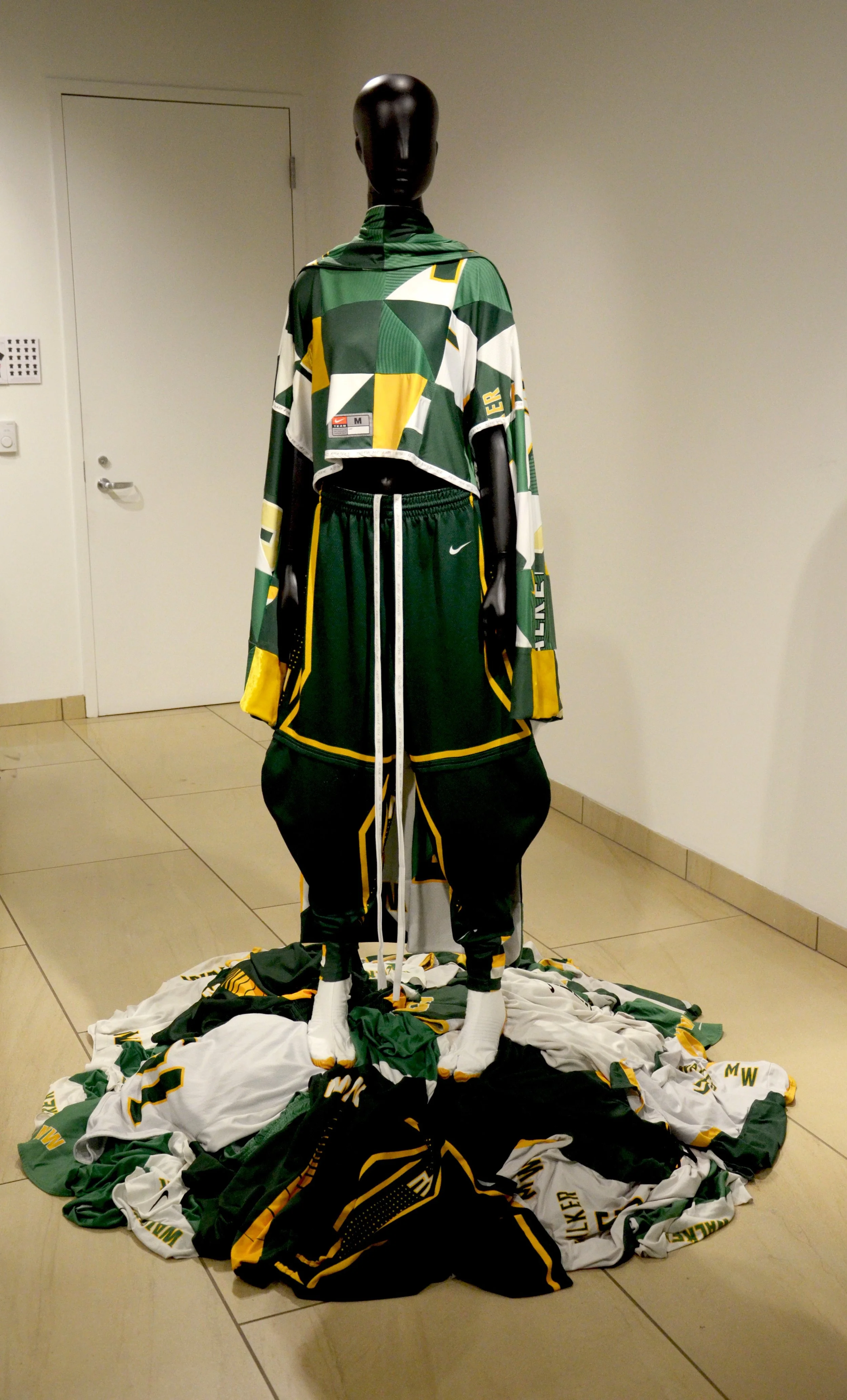
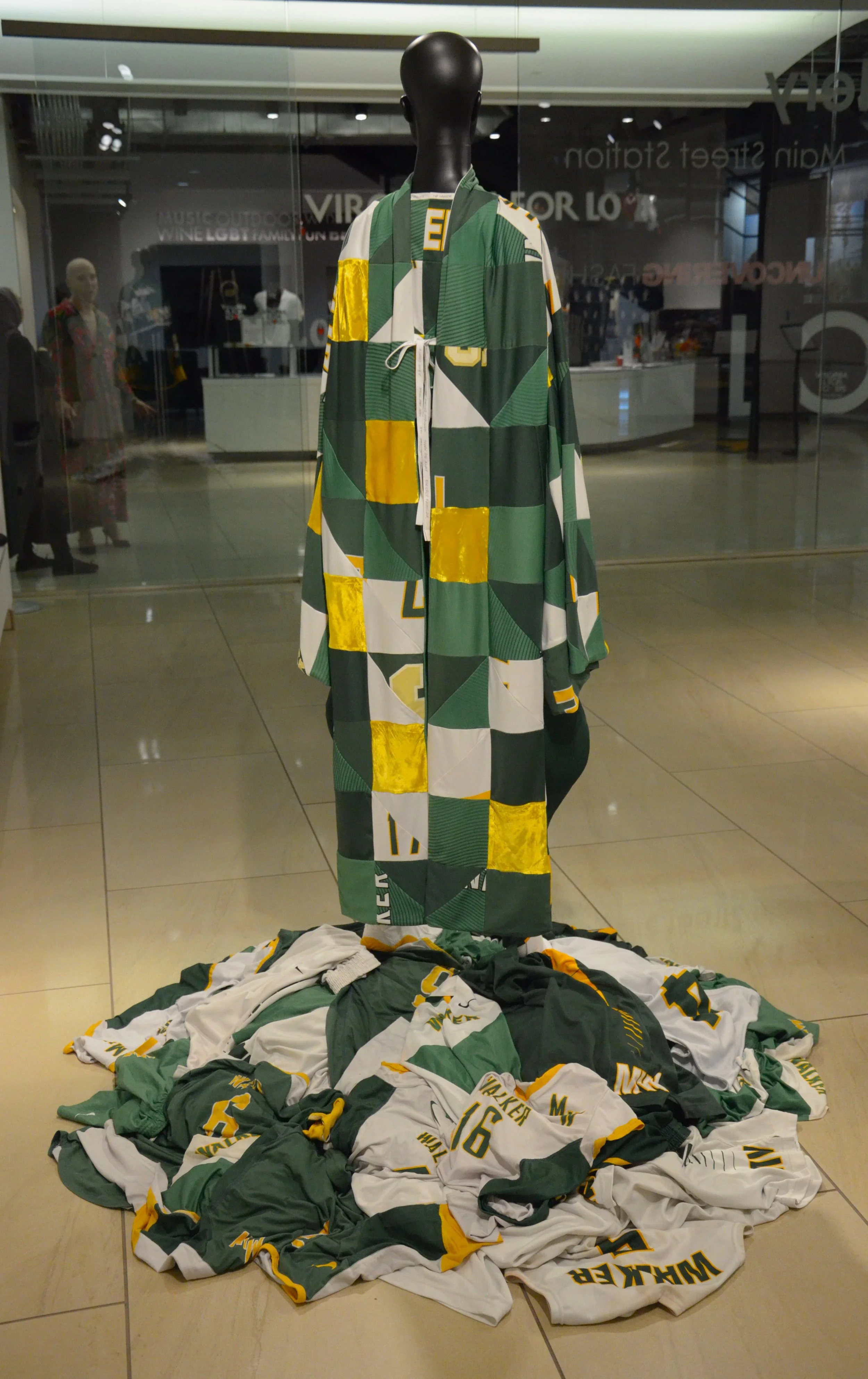
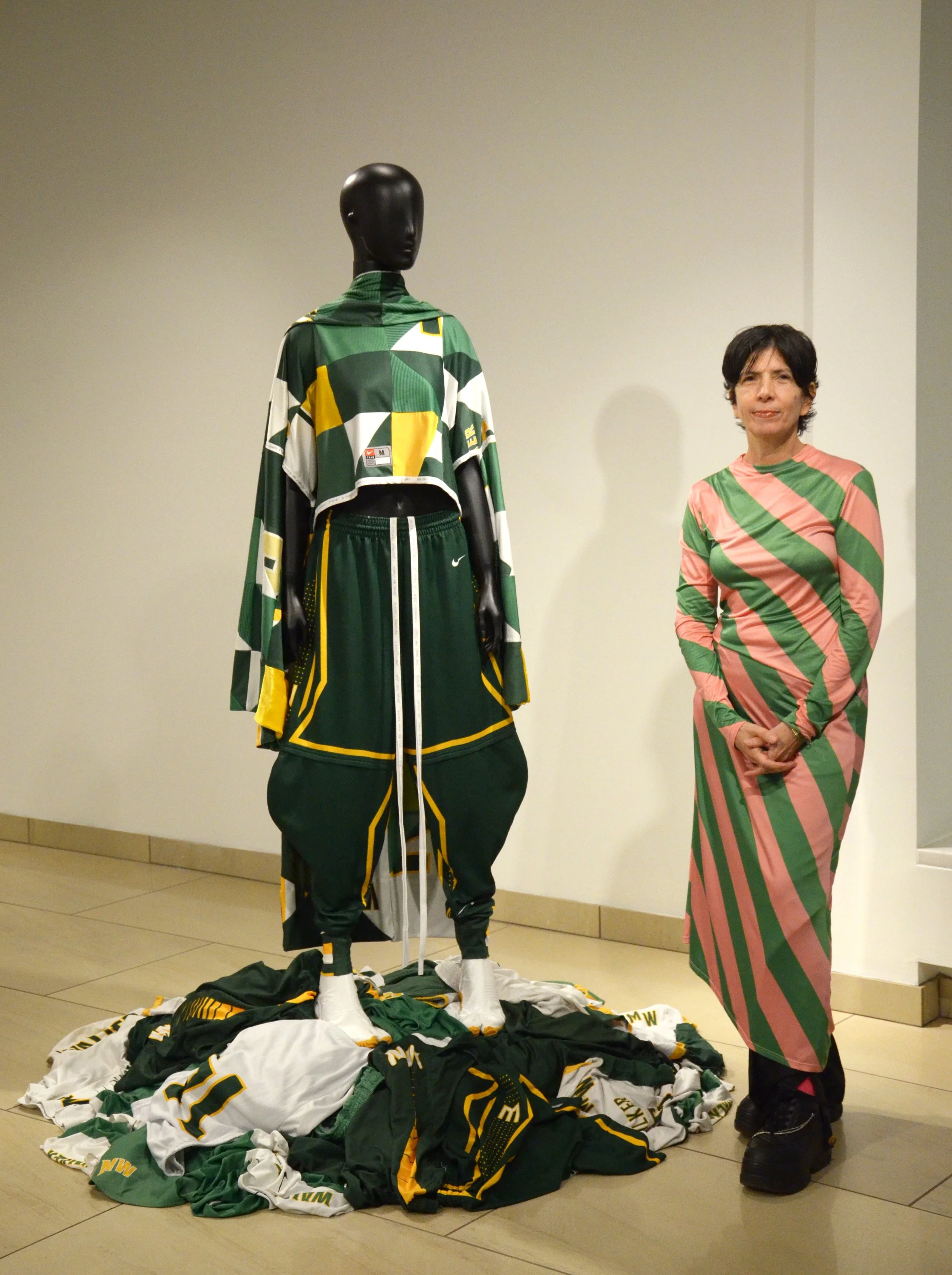
Discarded athletic uniforms from Maggie L. Walker Governor's School (approximately 20 pieces) and one velvet skirt
Body Double
Short Film, 8 minutes

In creating this diptych—Serial Killer and Body Double—I set out to explore the psychological mechanisms behind the kind of consumption that fuels the environmental catastrophe of textile waste. The project examines how our sense of self becomes entangled with the clothes we wear, and how this attachment mirrors emotional dependency in human relationships.
The work began with a question: what happens when the boundaries between who we are and what we consume begin to dissolve? I was interested in how the confusion between self and object—much like the confusion between self and romantic partner—leads to loss of autonomy, dissatisfaction, and the compulsive search for external validation.
These ideas take form in Body Double, an eight-minute experimental film that layers the same voice-over across differing image sequences. The repetition of a single text—altered only by visual context—creates confusion and disorientation, prompting viewers to question authenticity and originality. This structured ambiguity mirrors the instability of identity under consumer capitalism, where the self is endlessly reconstructed through desire.
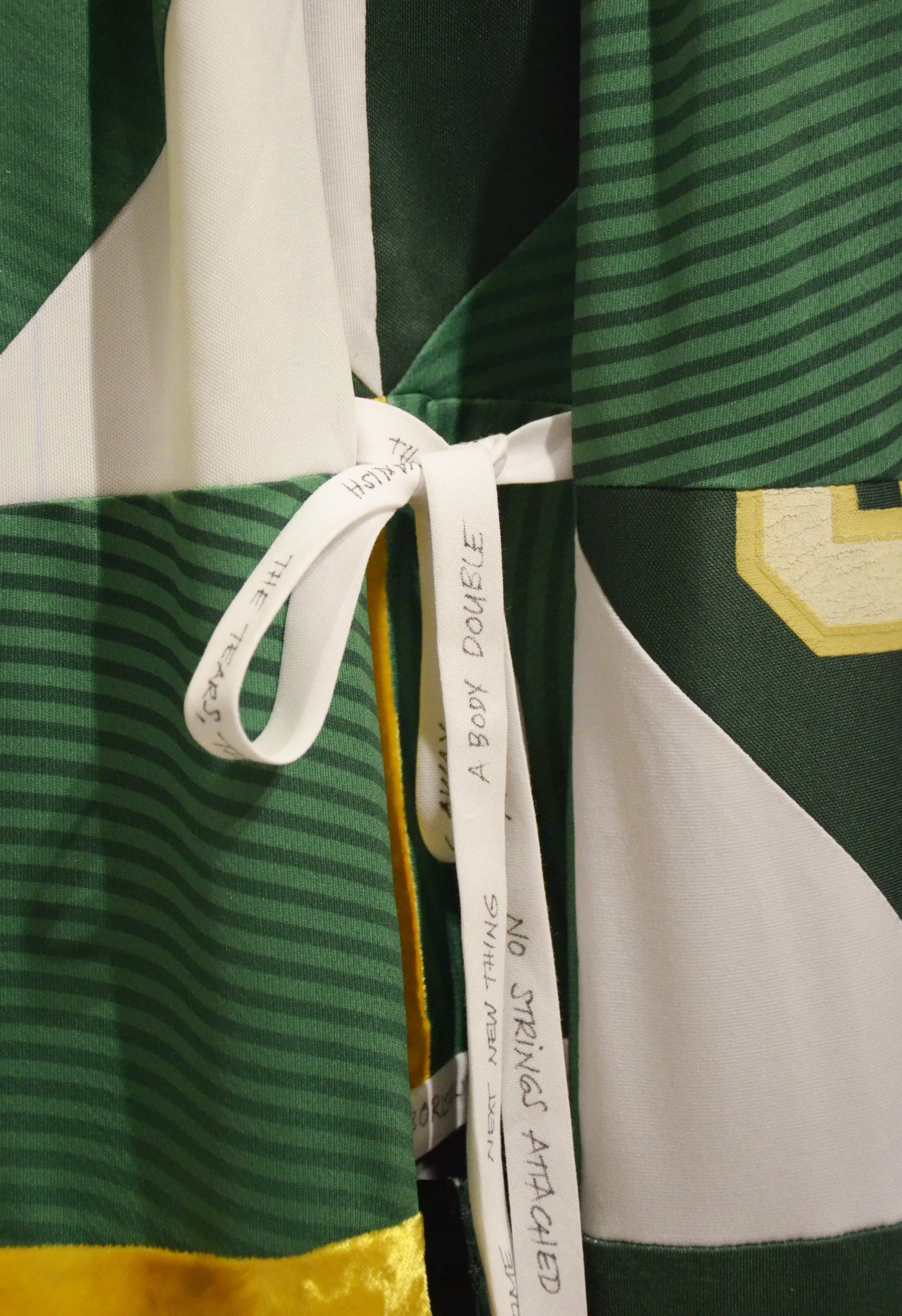
Parallel to the film, I constructed Serial Killer, an ensemble consisting of a kimono top, tobi pants, and an extra-long scarf. The garments were made from roughly twenty deconstructed Maggie L. Walker High School athletic uniforms and a velvet skirt. The use of uniforms became essential to the work’s meaning: they represent the paradox of fast fashion as a homogenizing force. In seeking individuality through mass-produced clothing, we ultimately reinforce sameness.
The materials themselves carried both ecological and symbolic weight. The polyester uniforms—non-degradable and donated through the UNCOVERING Fashion project—were transformed through labor-intensive patchwork and hand-stitching. Pairing these discarded garments with velvet, a fabric historically tied to luxury, was a deliberate act of revaluation. By treating the “worthless” as precious, I wanted to challenge the connection between disposability and value.
The inclusion of uniforms from this iconic Richmond high school also became a personal gesture—a way of grounding my practice in a city that has welcomed me and continues to shape my perspective. What began as a commentary on global systems of waste also became a quiet love letter to place and community.
Throughout the process, I was drawn to how meaning could shift across mediums. The tactile work of reconstructing garments echoed the conceptual layering of the film: both are acts of doubling. Body Double overlays voice and image to unsettle perception; Serial Killer doubles the function of the textile, transforming standardized material into singular form.