


Artist Bio
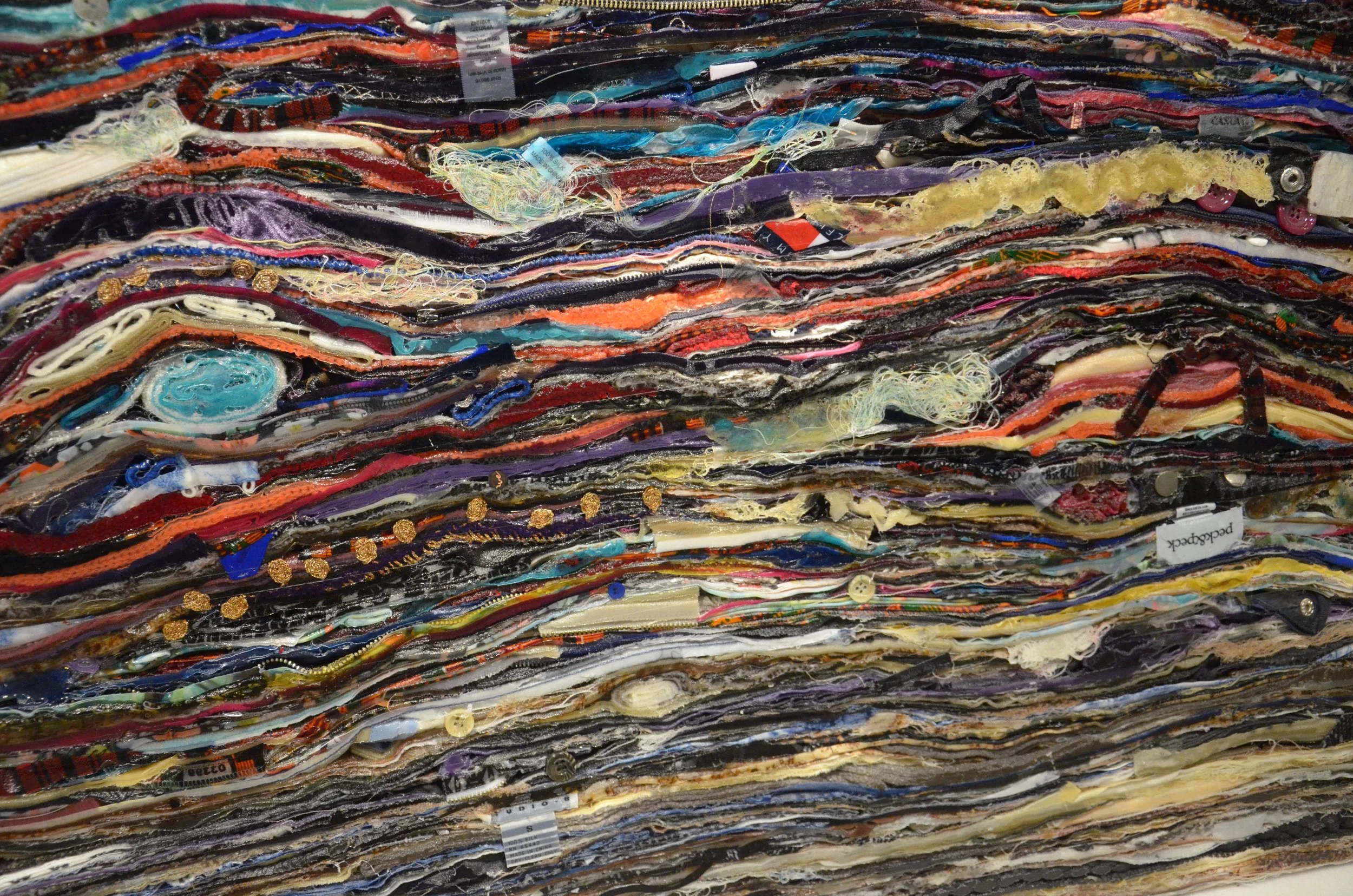
Loved and Laid to Waste
by Cate Latham
30” x 48”
Assortment of discarded textiles (41.5 pounds and 51 pieces: 13 tops, 6 sweaters, 2 shorts, 3 skirts, 3 pants, 4 dresses, 4 bed sheets, 2 duvet covers, 13 pillow cases, 1 scarf), Entropy Super Sap Resin, spruce frame
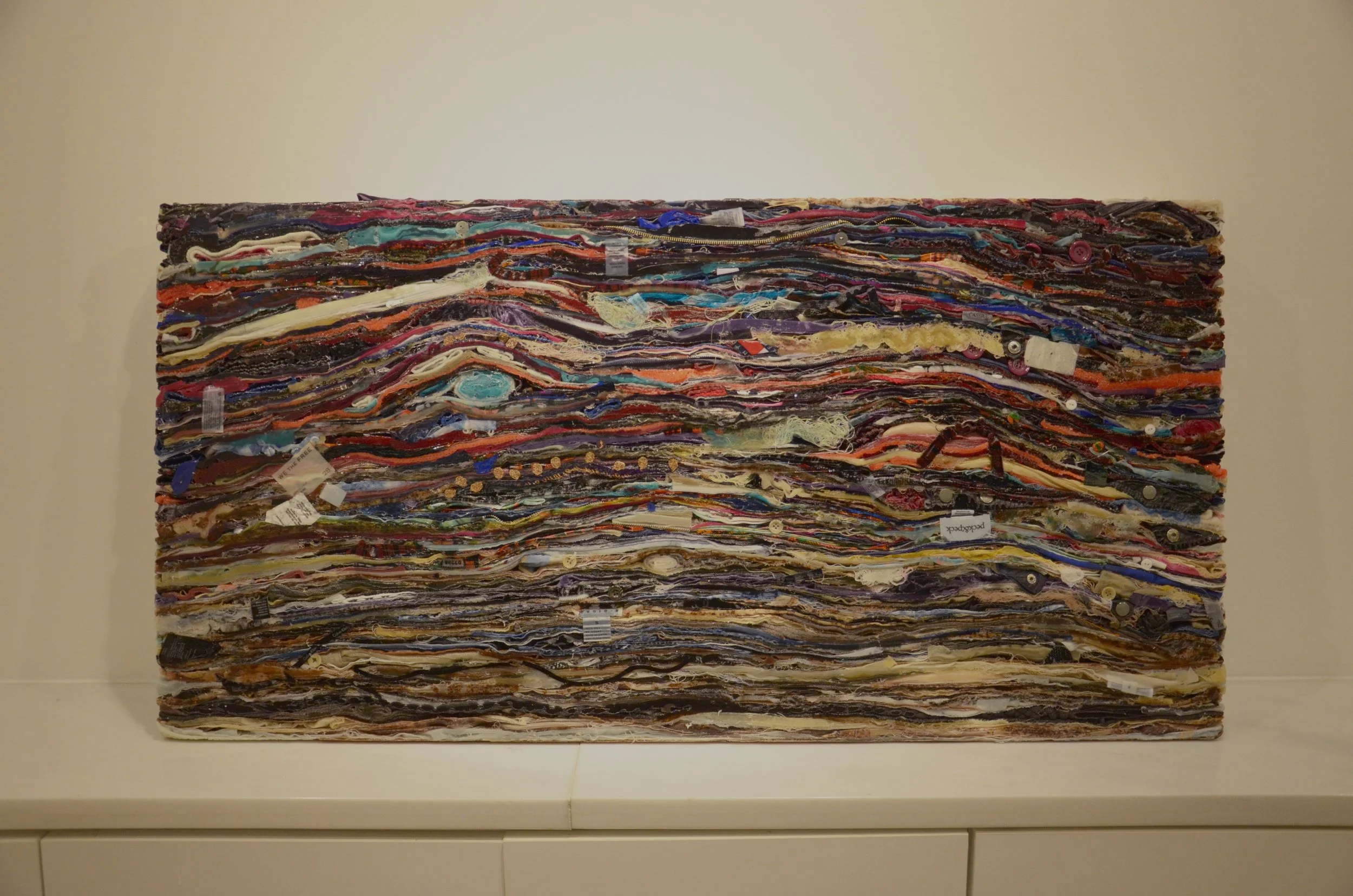
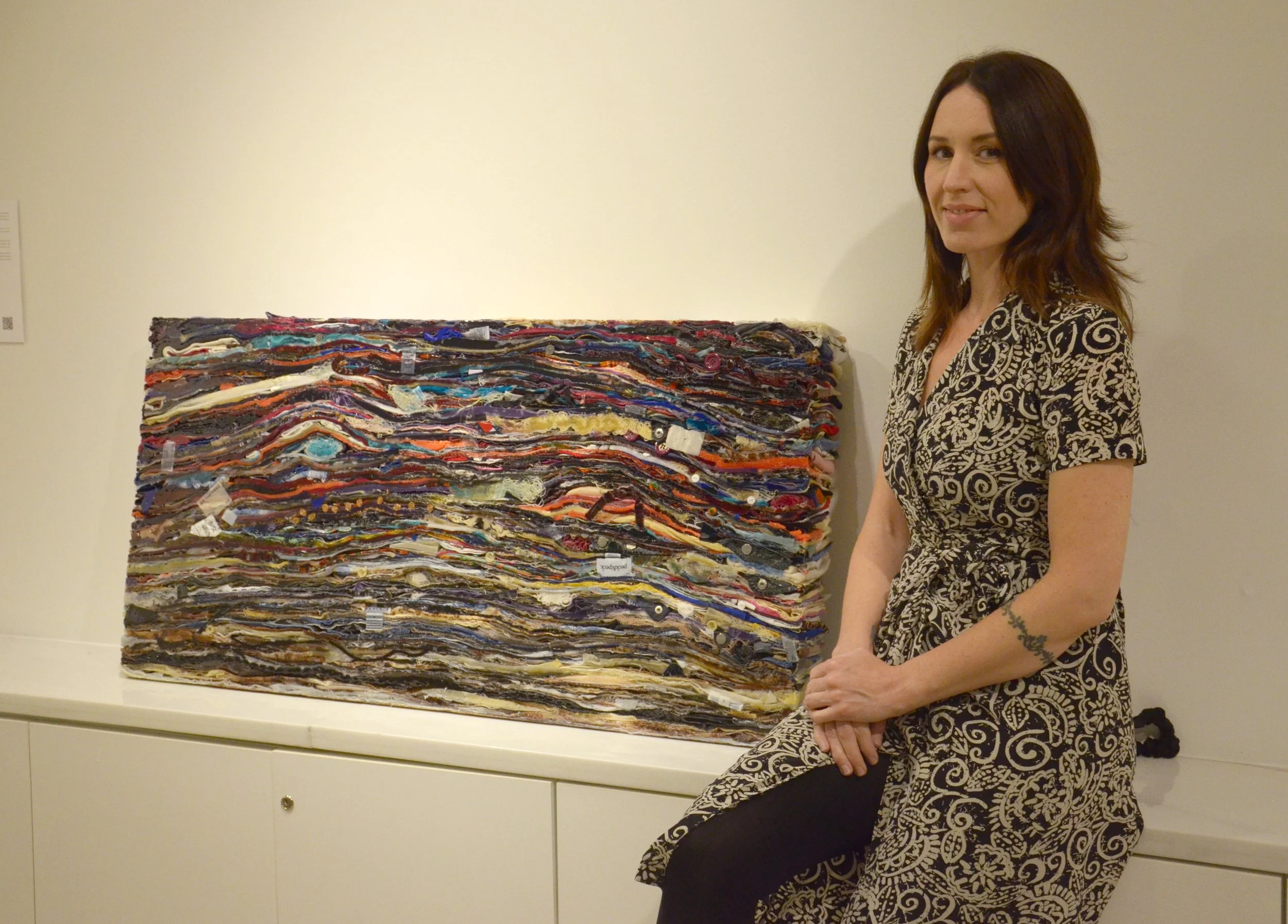
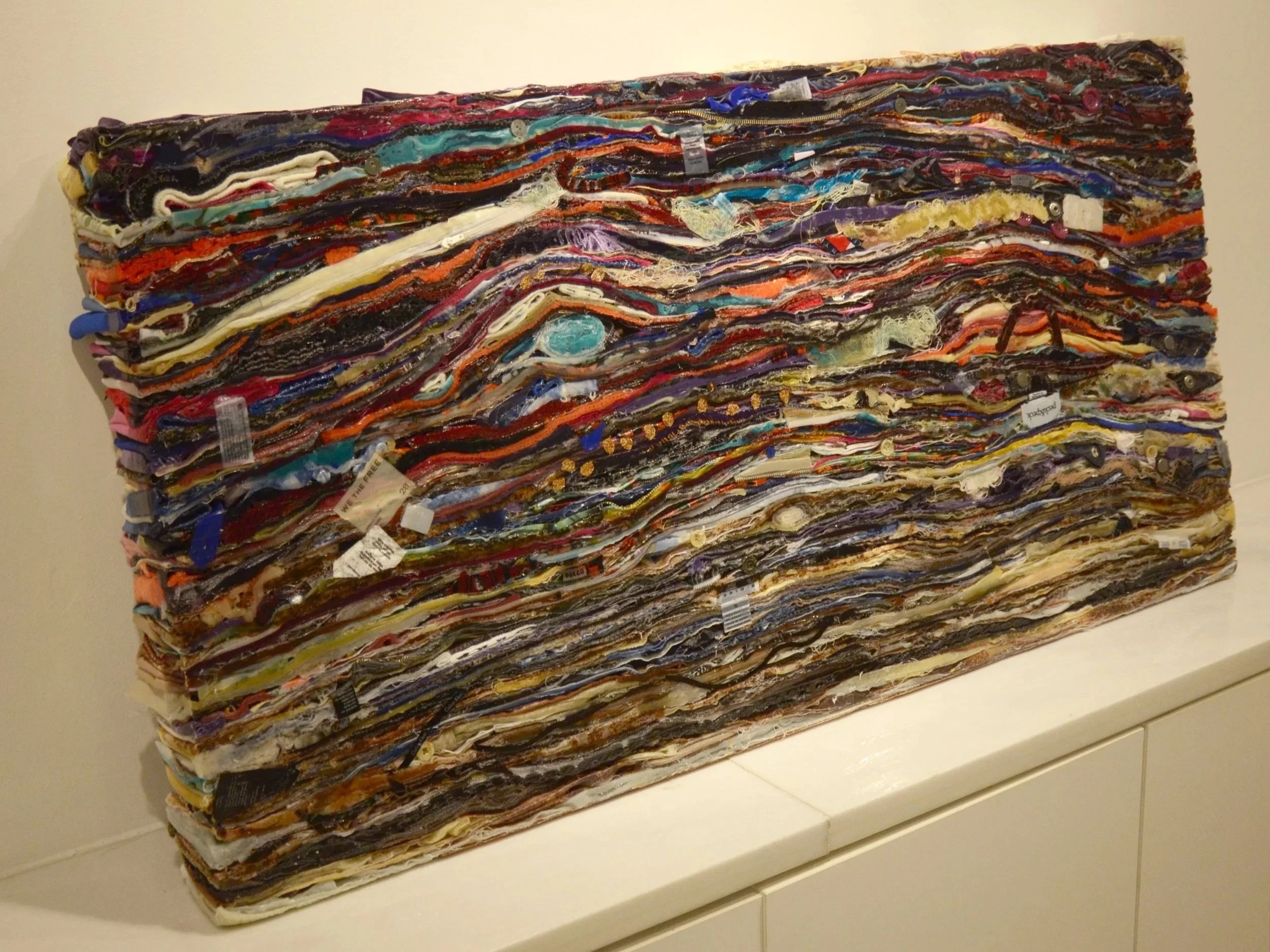

The inspiration for this wall relief began with a literal representation of textile waste in landfills.
The piece consists of roughly fifty pounds of discarded garments and bedding, cut into three-inch strips and stacked vertically within a wooden frame. Each strip was deliberately folded, twisted, gathered, or pleated to form a dense cross-section of color, texture, and production detail. Once the frame was filled, I poured epoxy between the layers to seal the composition, creating a single stratified surface.
Reflecting on the ideation process, I can clearly see how my experience as an educator shaped the work. My approach to delivering material often follows an equation-like structure: What is the message? Who is the audience? How can it be conveyed most effectively—while also remaining visually compelling (in the case of fine art)? Within the context of the Uncovering Fashion exhibition, the goal was to raise awareness around textile waste for both fashion insiders and the general public, using a defined medium. That framework led to an immediate, almost self-evident solution: a direct and legible expression of the problem itself. While the concept is very straightforward, the resulting piece carries deeper meaning—inviting reflection, emotional connection, and open-ended interpretation.
Throughout the process, I found myself studying each product and its fabric’s quality, construction, and finishing details. I wondered who and how many individuals were involved in their making: the fiber producers, spinners, mill workers, designers, pattern-makers, sellers, and consumers—and now myself, the one who has cemented their collective effort into permanence. While the work comments on a sobering topic of overproduction and excess, it also serves as a tribute to the human hands and histories intertwined in these materials—rescued from spending decades in a landfill, permanently connected.